Thursday.
Down to four of us for the moment—Ian, Joel, and me plus Maya as our local guide/gung ho worker/cheerleader—so we finished ripping up the floorboards and shoveling the mud from the dirt under the floor at Yukari’s house near the tunnel entrance. Chad and Jennifer arrive late tonight, and another team arrives this afternoon. From Japan: Dan and John, and joining them from Huntington Beach: Joe, Steve, Ryan, Chris and Gary.
Friday.
At the morning devotional someone asked Chad how he happened to be in Japan. He said when he and Jennifer were first married they took a backpacking trip through Africa. It was on that trip, he explained, that their experience of God became real and their purpose came into focus. It was Africa they fell in love with and where they thought they would end up, but instead they came to Japan as English teachers and stayed.
Steve, Gary, John, and Dan drove to Kesennuma where their group wanted to concentrate efforts. Their evening report described pretty complete devastation. They could see how far the water had come, because only houses on the hillsides survived and even some of those were damaged. They helped some of those people clean up and met a lady whose beauty shop was gone, but what she really missed was her haircutting tools and supplies. Then she says wait, and goes to her house and brings back scissors and cut a couple of the guys’ hair and wouldn’t take anything for it.
We went back to Yukari’s house to put down some temporary plywood flooring, this time with the expert crew of Joe, Chris and Ryan (who knew that church and missions staff could build stuff). Tony and Mary Anne surprised us by dropping by—they were now working with the animal rescue organization Kinship Circle—and they were with a team filming stories of people and their animals and rescues and such. Also with that team were a couple of ladies, Jackie and Danica, who were not doing anything critical for the next few days and asked if they could help us. Well that was a question that needn’t be asked twice, so now we with reinforcements continued boxing dishes and cleaning while the plywood crew did their thing.
We brought our team’s circular saw thinking we could plug it in upstairs seeing as how we were told there was no power to the first floor because of the water damage. Well, the second floor was locked, so we go, “Maya, will you please call the homeowner”? So after talking on her keitai (phone) for a minute she says plug the saw in here, so I did and then I say see it doesn’t work and then she says “breaker” (her English is getting better) and walks into the kitchen and just like that we have lights and power and everything. So I guess they just turn it off when they’re gone for safety. By midafternoon the main room is done and we start ripping out the kitchen floor because the people said we could do that room too if we had time.
Jumping ahead, now it’s getting dark and Chad and Jennifer show up and now we’re really cleaning like practically polishing the one piece of salvageable furniture and mopping the genkan (entrance area) to a spit-shine all because Joe and the crew are absolutely not going home until the kitchen has a new temporary floor and the window ledge is clean to we can put the pots and pans back and a potted geranium they bought as a housewarming gift is prominently placed by the entrance. Well it’s eight o’clock before the tools are cleaned and the door is set (it doesn’t close per se) back over the entrance.
So Joel’s done enough and we deposit him with his J Help group, and the Southern California guys will be taking off in the morning after their much appreciated work.
Tuesday, May 17, 2011
Sunday, May 15, 2011
Wednesday, May 11, 2011 Mucking, MRE’s, and the Sermon of the Mount
Early this morning Machiko, Alexis, Monica, Carol, and Marci headed back to Kobe. We took Tony and Mary Anne to the bus station. Joel stayed back at the dojo to clean up and organize our area.
Before dropping Stu off for his bus, he took us on a tour of the Watano Ha neighborhood where they had met some good people. It was a pleasant surprise to find Yasuhiro at home and before we knew it he was bringing us coffee which we drank sitting on stools in his driveway. Twenty years ago Yasu had attended a Christian-run University in Sendai. He told Stu that during the tsunami he remembered the Sermon on the Mount and it gave comfort and hope to know that God cared about him. He said his son was now attending high school at the same place he attended college
Because Stu hadn’t seen the commercial/port district up close I drove the long (but quicker) way around. The giant red tank was still on its side, and the railroad tracks were still hanging in thin air, but the previously flooded street had now been raised with several inches of gravel. It was a good thing we went that way because if we had taken the direct route, Stu would have missed his bus.
Stu had lived in Japan for a number of years, but most recently based in Singapore doing personal and spiritual development of ministers from Viet Nam and Cambodia. So for Stu it was great being back here using his Japanese. His ability to communicate was a real asset to the team.
Getting a late start, we picked up Joel back at the dojo, met Maya, and at the house (Chihiro’s cousin’s) near the tunnel entrance, we first had to finds a place to stack dishes, boxes and clothing. Then we got to pulling up the rotten floor. My technique was prying up the boards by breaking the nails loose board by board. But Ian found the giant digging pole and decided he could do it better by smashing the floor boards to smithereens. I’m sure it was very therapeutic, but we still had to pry the nails loose and now there were dozens of broken pieces and splinters lying in the mud. But did I say anything? Of course not. Ian was having too much fun. So we got half the floor removed and half the mud mucked, and at the end of the day Ian had a pretty good blister on his thumb. Dropped Maya off at her car.
The Jieitai (army) had set up an onsen (public bath) downtown in tents with generators for local residents without water and for cleanup workers. It was pretty basic but hey, it was free, and there was only the three of us so it wasn’t like this huge crew descending on the place. And—we ran into Joel’s real team which was working out of the second floor of a building nearby. The offered us some MRE’s but we passed.
Before dropping Stu off for his bus, he took us on a tour of the Watano Ha neighborhood where they had met some good people. It was a pleasant surprise to find Yasuhiro at home and before we knew it he was bringing us coffee which we drank sitting on stools in his driveway. Twenty years ago Yasu had attended a Christian-run University in Sendai. He told Stu that during the tsunami he remembered the Sermon on the Mount and it gave comfort and hope to know that God cared about him. He said his son was now attending high school at the same place he attended college
Because Stu hadn’t seen the commercial/port district up close I drove the long (but quicker) way around. The giant red tank was still on its side, and the railroad tracks were still hanging in thin air, but the previously flooded street had now been raised with several inches of gravel. It was a good thing we went that way because if we had taken the direct route, Stu would have missed his bus.
Stu had lived in Japan for a number of years, but most recently based in Singapore doing personal and spiritual development of ministers from Viet Nam and Cambodia. So for Stu it was great being back here using his Japanese. His ability to communicate was a real asset to the team.
Getting a late start, we picked up Joel back at the dojo, met Maya, and at the house (Chihiro’s cousin’s) near the tunnel entrance, we first had to finds a place to stack dishes, boxes and clothing. Then we got to pulling up the rotten floor. My technique was prying up the boards by breaking the nails loose board by board. But Ian found the giant digging pole and decided he could do it better by smashing the floor boards to smithereens. I’m sure it was very therapeutic, but we still had to pry the nails loose and now there were dozens of broken pieces and splinters lying in the mud. But did I say anything? Of course not. Ian was having too much fun. So we got half the floor removed and half the mud mucked, and at the end of the day Ian had a pretty good blister on his thumb. Dropped Maya off at her car.
The Jieitai (army) had set up an onsen (public bath) downtown in tents with generators for local residents without water and for cleanup workers. It was pretty basic but hey, it was free, and there was only the three of us so it wasn’t like this huge crew descending on the place. And—we ran into Joel’s real team which was working out of the second floor of a building nearby. The offered us some MRE’s but we passed.
Saturday, May 14, 2011
Monday and Tuesday May 9 and 10, 2011 Back to Work: karate and snowsleds
Monday.
Drove all day from Osaka to the dojo in the HiAce van. Driving with me were Joel from Nara, and Ian from Ishinome (Kobe). Ed. note: that's Ian in a picture from a later workday. About half way there we passed through Toyama where Joel grew up, so he was pointing out where he went to school and how Toyama is famous for pure mountain snow water, tulips, and squid that glow. Arrived at the dojo at 10:30 pm.
There we met up with the group that were the holdovers from Golden Week: Tony and Mary Anne who arrived just as I was leaving last month. They were glad to have been part of all the work done during Golden Week, but as akido instructors, the chance to be at the dojo and to talk and do karate with the sensei was particularly thrilling. Also Stu who trains ministers in Singapore, and the Kobe ladies: Alexis, Monica, Carol, Marci, and Machiko.
Tuesday.
At breakfast Stu shared a devotional thought from Psalm 97.1: “The LORD reigns, let the earth rejoice; let the many coastlands be glad.” This was an incredible lead-in to a time of sharing of all the experiences of the previous day or two:
The team had visited Minamisanriku which was almost completely devastated. They did find a barber in a shack and during the time they were in contact with him, they had prayed with him. When they saw him next, his request for a temporary building had been approved, and he felt like things were beginning to fall into place for him.
Mary Anne described Machiko talking and hugging and praying and with this one little woman and sharing a Bible passage with her and she ended up asking for a Bible. Then a little boy ran up and asked in broken English if they were Presbyterian or Catholic.
Then Stu talked about a new neighborhood they had been focusing on east of the train station. Near the river, massive destruction, but on one street they had been able to meet several people while cleaning out the gutter/storm drain ditch in front of a house. In that house was an extended family—brother, sister, baby, father—eight people now living there. Together they had lost seven vehicles, none of which the insurance would be replacing. They had mostly worked at the seaweed factory which was now gone and they were getting no assistance. Tony remarked that God has taken away all the things they depended on; these material things had become idols. All they have left now is the one true God. He added that we’ve been praying that God would break through the strongholds that are keeping people from Him. But referring back to Stu’s verse about the coastlands, maybe there were people along these coastal areas who have been looking for the living, loving God. So we prayed that God would lead us to those whose hearts were prepared to receive him.
So we left with a dual agenda—locate a house that Chihiro told us needed the crawlspace cleared of mud, and then set out food and supplies and children’s books and toys in a parking lot nearby for the neighborhood. So half of us spent three hours crawling under this house scraping dried mud with dust pans and pulling it out on a plastic snow sled with a rope. Gives “sledding” a whole new meaning. So while we got down and dirty, Stu met a thirty-five year old man who came by and Stu asked if he was married. He said he had lost his wife and child and workplace in the tsumani. Later Stu’s took out his camera, and showed me the picture of the man. It wasn’t what I was expecting. In the photo he appeared to be relaxed and happy, but all I could think was how incredibly hard it would be to have the courage to start over if I were him.
Drove all day from Osaka to the dojo in the HiAce van. Driving with me were Joel from Nara, and Ian from Ishinome (Kobe). Ed. note: that's Ian in a picture from a later workday. About half way there we passed through Toyama where Joel grew up, so he was pointing out where he went to school and how Toyama is famous for pure mountain snow water, tulips, and squid that glow. Arrived at the dojo at 10:30 pm.
There we met up with the group that were the holdovers from Golden Week: Tony and Mary Anne who arrived just as I was leaving last month. They were glad to have been part of all the work done during Golden Week, but as akido instructors, the chance to be at the dojo and to talk and do karate with the sensei was particularly thrilling. Also Stu who trains ministers in Singapore, and the Kobe ladies: Alexis, Monica, Carol, Marci, and Machiko.
Tuesday.
At breakfast Stu shared a devotional thought from Psalm 97.1: “The LORD reigns, let the earth rejoice; let the many coastlands be glad.” This was an incredible lead-in to a time of sharing of all the experiences of the previous day or two:
The team had visited Minamisanriku which was almost completely devastated. They did find a barber in a shack and during the time they were in contact with him, they had prayed with him. When they saw him next, his request for a temporary building had been approved, and he felt like things were beginning to fall into place for him.
Mary Anne described Machiko talking and hugging and praying and with this one little woman and sharing a Bible passage with her and she ended up asking for a Bible. Then a little boy ran up and asked in broken English if they were Presbyterian or Catholic.
Then Stu talked about a new neighborhood they had been focusing on east of the train station. Near the river, massive destruction, but on one street they had been able to meet several people while cleaning out the gutter/storm drain ditch in front of a house. In that house was an extended family—brother, sister, baby, father—eight people now living there. Together they had lost seven vehicles, none of which the insurance would be replacing. They had mostly worked at the seaweed factory which was now gone and they were getting no assistance. Tony remarked that God has taken away all the things they depended on; these material things had become idols. All they have left now is the one true God. He added that we’ve been praying that God would break through the strongholds that are keeping people from Him. But referring back to Stu’s verse about the coastlands, maybe there were people along these coastal areas who have been looking for the living, loving God. So we prayed that God would lead us to those whose hearts were prepared to receive him.
So we left with a dual agenda—locate a house that Chihiro told us needed the crawlspace cleared of mud, and then set out food and supplies and children’s books and toys in a parking lot nearby for the neighborhood. So half of us spent three hours crawling under this house scraping dried mud with dust pans and pulling it out on a plastic snow sled with a rope. Gives “sledding” a whole new meaning. So while we got down and dirty, Stu met a thirty-five year old man who came by and Stu asked if he was married. He said he had lost his wife and child and workplace in the tsumani. Later Stu’s took out his camera, and showed me the picture of the man. It wasn’t what I was expecting. In the photo he appeared to be relaxed and happy, but all I could think was how incredibly hard it would be to have the courage to start over if I were him.
Saturday and Sunday May 7 and 8, 2011 Two New Births
Saturday.
Thank you God for the safe birth of baby boy Titus to Paul and Stacey Herrington this morning at 8:30.
I mailed some things home to the US and sent some selected blogs to Dianne at the Martinez church. We cleaned Brent and Sandy’s apartment to get ready for using the oferu tub for a baptism Sunday.
Sunday.
I learned the song Dare Demo “If any man is in Christ, he is a new creation” from 2 Cor. 5.17 so I would know it for later. Then re-packed my gear for my return to Tohoku. The Rogers had invited the local missionary workers and all their Japanese Bible study contacts to Tomomi’s special day. Leslie and Sarah and the girls, David, myself, one lady from a Bible study and her little daughter were all there. Kumi came late as she had been at a funeral.
Brent prepared a simple, meaningful service to fit the occasion. We sang songs about the new life and we read from Ac 8 about the Ethiopian and Rom 6 about the meaning of baptism. Brent at Tomomi’s request asked her in English if she believed Jesus was the Son of God and wanted to make him Lord of her life. We set up a cell phone in the bathroom and Skyped it to the computer in the dining room so we could all see, because obviously the bathroom was too small for all of us. Since an oferu tub is kind of small and square and deep, Sandy had done a test run earlier in the day to determine just the right amount of water so it could cover Tomomi, but not overflow. So that was one of the many things that we had to think of ahead of time, that you take for granted in the US. They had even thought about renting the youth hostel so they would a larger bath and more room.
We sang some more while Tomomi changed, and then Leslie read from 1 Corinthians before we shared communion. It was all so low-key, but meaningful. Brent and Sandy had been building a relationship with Tomomi for so long, and she had done so much thinking and asking, and she is a well-respected member of the community, so that this was really a thrilling moment for them.
The thought struck me that we had just watched the royal wedding on TV and you know it’s important because of all the pageantry and finery and ritual and tradition. And even there, what was most important was not what you could see, but the commitment and devotion in the couple’s hearts. Here we had also had a special occasion, but just watching, you might never guess that what had happened was far more important than that wedding, because the amazing transformation and the wonder that God was working were all unseen.
Thank you God for the safe birth of baby boy Titus to Paul and Stacey Herrington this morning at 8:30.
I mailed some things home to the US and sent some selected blogs to Dianne at the Martinez church. We cleaned Brent and Sandy’s apartment to get ready for using the oferu tub for a baptism Sunday.
Sunday.
I learned the song Dare Demo “If any man is in Christ, he is a new creation” from 2 Cor. 5.17 so I would know it for later. Then re-packed my gear for my return to Tohoku. The Rogers had invited the local missionary workers and all their Japanese Bible study contacts to Tomomi’s special day. Leslie and Sarah and the girls, David, myself, one lady from a Bible study and her little daughter were all there. Kumi came late as she had been at a funeral.
Brent prepared a simple, meaningful service to fit the occasion. We sang songs about the new life and we read from Ac 8 about the Ethiopian and Rom 6 about the meaning of baptism. Brent at Tomomi’s request asked her in English if she believed Jesus was the Son of God and wanted to make him Lord of her life. We set up a cell phone in the bathroom and Skyped it to the computer in the dining room so we could all see, because obviously the bathroom was too small for all of us. Since an oferu tub is kind of small and square and deep, Sandy had done a test run earlier in the day to determine just the right amount of water so it could cover Tomomi, but not overflow. So that was one of the many things that we had to think of ahead of time, that you take for granted in the US. They had even thought about renting the youth hostel so they would a larger bath and more room.
We sang some more while Tomomi changed, and then Leslie read from 1 Corinthians before we shared communion. It was all so low-key, but meaningful. Brent and Sandy had been building a relationship with Tomomi for so long, and she had done so much thinking and asking, and she is a well-respected member of the community, so that this was really a thrilling moment for them.
The thought struck me that we had just watched the royal wedding on TV and you know it’s important because of all the pageantry and finery and ritual and tradition. And even there, what was most important was not what you could see, but the commitment and devotion in the couple’s hearts. Here we had also had a special occasion, but just watching, you might never guess that what had happened was far more important than that wedding, because the amazing transformation and the wonder that God was working were all unseen.
Friday, May 6, 2011
Wednesday through Friday, May 4-6, 2011 Packaging, Pictures, Paul and Plans
Blog Update
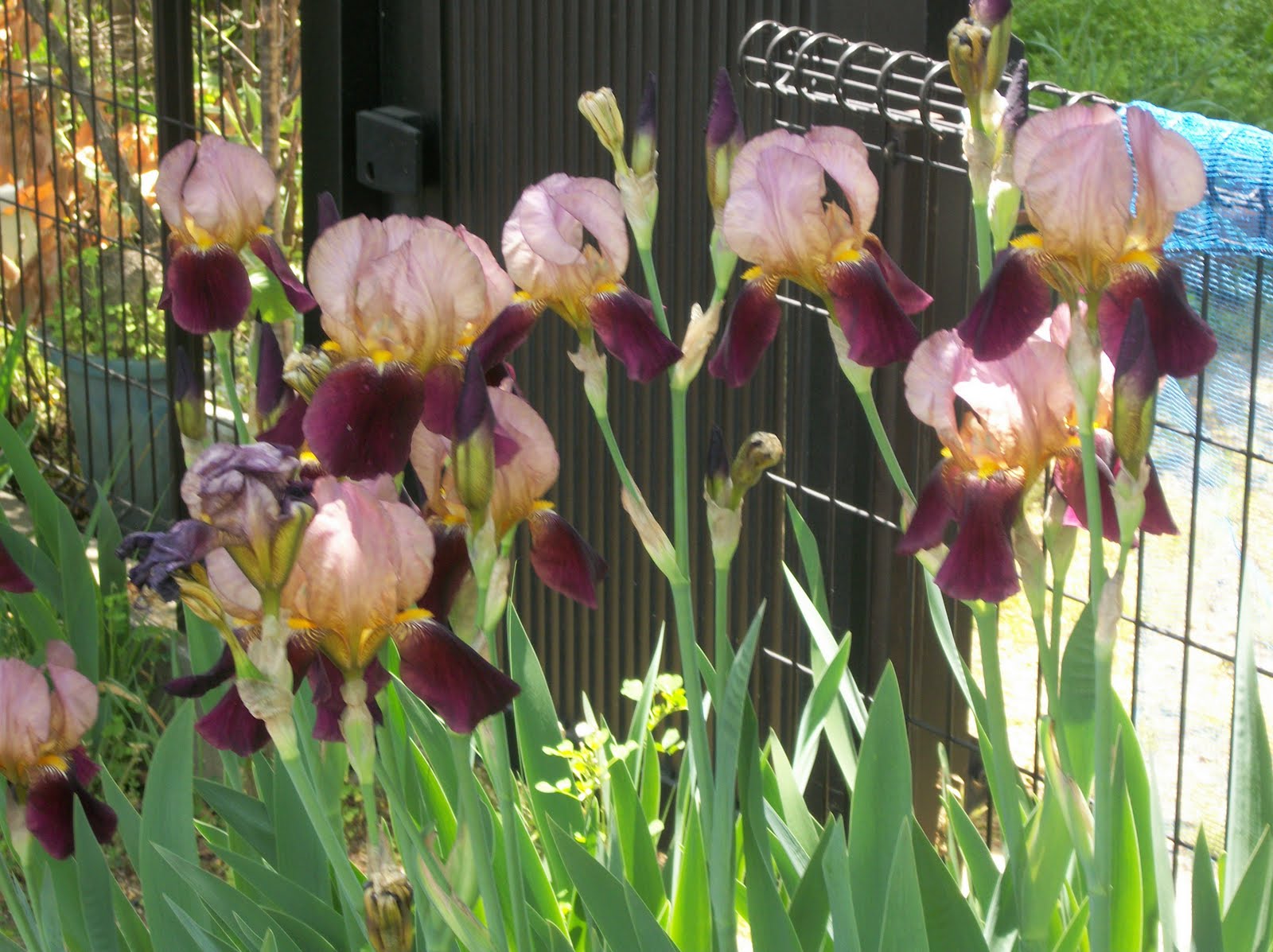
In Kojima spring is in the air. Thursday is Children’s Day, the end of Golden Week. In their honor, homes fly carp pennants, families go on outings, and a particular variety of purple iris blooms.
The futons are aired out on the balcony, the clothes actually get dry in a day, and offices are closed. Brent and Sandy are introducing me to the special joy that is watching past seasons of The West Wing.
None of Brent and Sandy’s adult students are Christians although several of them join Sandy for weekly Bible studies. Nevertheless their interest and concern about what is going on in the Tohoku area is high. So high that they want to hear my news and stories. They’ve also been bringing small children’s books, toys and clothing to the Logos English School as donations. On Wednesday, Brent, Sandy and I sorted and shipped 8 boxes directly to the dojo for distribution.
In the afternoon I tackled the hundreds of pictures I’ve taken along with more from Paul, Beth, and Hannah Seelen.
Thursday we hit the road—OK, it was our bicycles and what we hit was a trail—the old narrow-gauge route northeast to Chiamachi Station and back—about 15 miles round trip. Sandy had never been that far on the trail, so with a picnic lunch and a rough map we made our way through the hills, bamboo groves, garden plots, pocket suburbs, and highway undercrossings, only having to ask directions a few times. Brent and Sandy plug along; I stop and take a picture, hurry and catch up; stop, take a picture, hurry and catch up; they thought it was funny.
So many beautiful homes and gardens. Our lunch stop is next to the Cha Cha Store. It’s like 4 stores in one and in one corner is the donut shop, except in the USA you normally don’t buy pizza slices at a donut shop¬—I decide to try a purple bean paste sweet potato bread.
Why, you might ask, do you need “donuts” when you have a picnic lunch packed? I say some questions don’t deserve an answer. So as were packing our trash for the return ride, Brent says he has a confession to make. What—he finally feels remorse for his rude remarks? No, it turns out while Sandy and I were in Hiroshima Tuesday, Brent rode here by himself, just to make sure he could (being legally blind, and having a pacemaker and all), and now we find out he was just playing along while we were asking directions.
Jennifer’s 5/6 Osaka Team update is so encouraging. After helping a family clean out their house one day, the next day when the team returned, the trucks were clearing debris fromtheir block-—perfect timing. Better yet, when they asked why we were helping, Chad got to share about Jesus’ love for us. Then as our group was setting up the barbecue, the same family offered to help, and the end result was that 100 people were fed directly, perhaps double that when you consider the food taken home to other family members.
Friday, I meet some of Sandy’s adult students at their studio, and afterward, they serve green tea and sweets, but without the formal ritualized tea ceremony, thank goodness. I wash the windows at the English school, find out that I picked the very worst exchange rate day to cash in the rest of my traveller’s checks, try to label some more pictures, and meet up with our friends Paul and Stacey Herrington for more tea and sweets. We discuss their future plans after the baby and Japan mission work in general. My schedule is Sunday night back to Osaka, Monday morning to Tohoku for 10 more days before returning to the states. They ask me if I’ll be different after I go home, and I hem and haw and say I hope so, but I’m still not praying enough, and I’ll still have to deal with stuff, and projects, and money issues when I return. Learning to make people a priority, and maybe reverse culture shock too.
But my issues have nothing on what the people in Tohoku are facing. What happens when the assistance ends, and the aid groups stop delivering rice, and your relatives get tired of 15 people living in one house, and the building where you used to work and maybe even your boss are still gone, and you can’t rebuild your own house for whatever reason, and the familiar neighbors and shops and schools are gone, and maybe the only jobs are 50 miles away in a strange city. . .and you have no one to talk to? What then? Yes you survived, but now you have to figure out the rest of your life.
In Kojima spring is in the air. Thursday is Children’s Day, the end of Golden Week. In their honor, homes fly carp pennants, families go on outings, and a particular variety of purple iris blooms.
The futons are aired out on the balcony, the clothes actually get dry in a day, and offices are closed. Brent and Sandy are introducing me to the special joy that is watching past seasons of The West Wing.
None of Brent and Sandy’s adult students are Christians although several of them join Sandy for weekly Bible studies. Nevertheless their interest and concern about what is going on in the Tohoku area is high. So high that they want to hear my news and stories. They’ve also been bringing small children’s books, toys and clothing to the Logos English School as donations. On Wednesday, Brent, Sandy and I sorted and shipped 8 boxes directly to the dojo for distribution.
In the afternoon I tackled the hundreds of pictures I’ve taken along with more from Paul, Beth, and Hannah Seelen.
Thursday we hit the road—OK, it was our bicycles and what we hit was a trail—the old narrow-gauge route northeast to Chiamachi Station and back—about 15 miles round trip. Sandy had never been that far on the trail, so with a picnic lunch and a rough map we made our way through the hills, bamboo groves, garden plots, pocket suburbs, and highway undercrossings, only having to ask directions a few times. Brent and Sandy plug along; I stop and take a picture, hurry and catch up; stop, take a picture, hurry and catch up; they thought it was funny.
So many beautiful homes and gardens. Our lunch stop is next to the Cha Cha Store. It’s like 4 stores in one and in one corner is the donut shop, except in the USA you normally don’t buy pizza slices at a donut shop¬—I decide to try a purple bean paste sweet potato bread.
Why, you might ask, do you need “donuts” when you have a picnic lunch packed? I say some questions don’t deserve an answer. So as were packing our trash for the return ride, Brent says he has a confession to make. What—he finally feels remorse for his rude remarks? No, it turns out while Sandy and I were in Hiroshima Tuesday, Brent rode here by himself, just to make sure he could (being legally blind, and having a pacemaker and all), and now we find out he was just playing along while we were asking directions.
Jennifer’s 5/6 Osaka Team update is so encouraging. After helping a family clean out their house one day, the next day when the team returned, the trucks were clearing debris fromtheir block-—perfect timing. Better yet, when they asked why we were helping, Chad got to share about Jesus’ love for us. Then as our group was setting up the barbecue, the same family offered to help, and the end result was that 100 people were fed directly, perhaps double that when you consider the food taken home to other family members.
Friday, I meet some of Sandy’s adult students at their studio, and afterward, they serve green tea and sweets, but without the formal ritualized tea ceremony, thank goodness. I wash the windows at the English school, find out that I picked the very worst exchange rate day to cash in the rest of my traveller’s checks, try to label some more pictures, and meet up with our friends Paul and Stacey Herrington for more tea and sweets. We discuss their future plans after the baby and Japan mission work in general. My schedule is Sunday night back to Osaka, Monday morning to Tohoku for 10 more days before returning to the states. They ask me if I’ll be different after I go home, and I hem and haw and say I hope so, but I’m still not praying enough, and I’ll still have to deal with stuff, and projects, and money issues when I return. Learning to make people a priority, and maybe reverse culture shock too.
But my issues have nothing on what the people in Tohoku are facing. What happens when the assistance ends, and the aid groups stop delivering rice, and your relatives get tired of 15 people living in one house, and the building where you used to work and maybe even your boss are still gone, and you can’t rebuild your own house for whatever reason, and the familiar neighbors and shops and schools are gone, and maybe the only jobs are 50 miles away in a strange city. . .and you have no one to talk to? What then? Yes you survived, but now you have to figure out the rest of your life.
Thursday, May 5, 2011
Tuesday, May 3, 2011 Playing Tourist and Sobering Images
Sandy took me to see 2 of the most visited sites in West Japan—first to Miyajima. Miya means temple and jima means island, so if I’d written Miyajima Island that would have been redundant. Think of images you’ve seen of Japan, and the giant red O torii (Shinto shrine) gate in the water at Miyajima is sure to be one of them.
We left Kojima on the train at 6:30, arriving on the island by 9:30 or 10, early enough that the line for pictures in front of the gate was still fairly short. It’s pretty neat the way it works: when your group reaches the front of the line, you turn around, hand your camera to the person just behind you in line who takes your picture, then they pose and the people behind them take their picture, and so one. However, we chose to avoid the crowds at these most popular spots, which gave us a chance to appreciate the quiet and beauty. And the offbeat paths gave us surprising glimpses around every corner.
At the top of Mt. Misen are several temples, some of which date back hundreds of years. We rode the aerial tramway as far as it went and were treated to views that were impressive through the haze. The visitor center at the upper tram station had a sacred column where couples could pledge their eternal love while having a picture taken—cheesy or charming? You decide. Back at the bottom we needed to buy a few gifts, so had to join the crowds buying souvenirs, tee shirts, and eel or oyster treats (it seems every city in Japan has something it is famous for).
At one nearly empty shop we were waited on by an older woman in a traditional kimono (for tourist consumption?) and her even older father. Sandy thought it was sweet, that when he tried to ring us up she gently helped him with the change. We exited the shopping mob to meet more of the tame deer which will pull your map or your ferry ticket out of your pocket and eat it. Forewarned is forearmed.
What thoughts are stirred by the dramatic temples and their upswept beams? The beauty, or the thought that the apostle Paul said that the living God does not live in temples made by human hands, does not need anything from us, but made us that we might seek and find him?
Back at the Hiroshima main train station, we cram into the streetcars for the atomic bomb memorial museum. With ten stops to go, at each stop people somehow make some standing room for a few more. A young woman starts to give me her seat so I can sit by Sandy, but I decline. Everyone’s jammed in together but no one complains; in fact, oddly enough, no one talks—about sports scores, weather or anything at all. Then I remember, on the ferry, we broke through the natural reserve when we noticed a young couple had 3-year-old twins and we struck up a conversation with them and were silly with the kids.
The first thing you see at the atomic memorial trolley stop is the iconic, stark preserved dome and ruins. If the beauty we saw in the morning was about serenity, the Peace Memorial is about the unthinkable.
Walking first along the river to the south, then across it, we make our way to the memorial park, main museum, and several other sculptures and displays. Unfortunately we chose flower festival day to visit and immediately we found not only crowds, but several stages and international performing groups presumably drawn by this unique place.
As the epicenter of the first wartime use of nuclear weaponry, it has become the epicenter of world peace movements. So it was somewhat jarring that the first sights and sounds were of a hula group with guitars and vocals performing on the bank of the river. Other groups displayed traditional drumming, or baton twirling, all of course for the cause of peace. But the paper cranes (see your library or Wikipedia for the story of Sadako Sasaki and her paper cranes) of all sizes sent in by tens of thousands of children from all over the world begin to focus one’s thoughts.
Eternal flames, soaring sculptures, reflecting pools, people offering prayers, and we’re approaching the main museum.
Once inside, we’re again in a quiet crush of people, but this time it is not reticence, but the somber hush of a thousand minds collectively taking in images of horror.
Feet slowly shifting, gazes moving from one image to another—a watch stopped at 8:15, a movie of the bombing run, a shock of hair from a victim, a diorama of smoking ruins, shredded clothing and personal items whose owners were never found, objects melted into bizarre shapes. I consider myself a well-read, thinking person. I see merit in the arguments that atomic weapons ended World War Two and prevented World War Three (barely) because of their very unthinkableness. But I suppose the victims of an atomic holocaust have a right to set the terms of the debate. Of course when I think of the naïveté of wishing that North Korea and Iran would join the table of rational discourse, I don’t have much hope. But if someone needs to keep mankind pointed toward the dream of peace, why not the children of Japan?
What about the comparisons between Hiroshima and the earthquake/tsunami damage of 3-11-11? Some images are reminiscent: flattened cities, helpless victims gone in a moment (numerous children in both cases—in Hiroshima the children were employed in demolition in the creation of firebreaks), people fending for themselves, years of rebuilding ahead, a radiation involvement. But the contrasts as well: the one manmade, the other from nature; the one fell upon a broken nation, the other to a prosperous; 140,000 lives in one, 25,000 in the other; ultimate radiation effects—yet to be determined. One ushered in a modern era; perhaps the other will usher in an era where Christians regard Japan with new awareness. So where does that leave us? May we be both thoughtful students of history, and faithful servants of His story. . .
We left Kojima on the train at 6:30, arriving on the island by 9:30 or 10, early enough that the line for pictures in front of the gate was still fairly short. It’s pretty neat the way it works: when your group reaches the front of the line, you turn around, hand your camera to the person just behind you in line who takes your picture, then they pose and the people behind them take their picture, and so one. However, we chose to avoid the crowds at these most popular spots, which gave us a chance to appreciate the quiet and beauty. And the offbeat paths gave us surprising glimpses around every corner.
At the top of Mt. Misen are several temples, some of which date back hundreds of years. We rode the aerial tramway as far as it went and were treated to views that were impressive through the haze. The visitor center at the upper tram station had a sacred column where couples could pledge their eternal love while having a picture taken—cheesy or charming? You decide. Back at the bottom we needed to buy a few gifts, so had to join the crowds buying souvenirs, tee shirts, and eel or oyster treats (it seems every city in Japan has something it is famous for).
At one nearly empty shop we were waited on by an older woman in a traditional kimono (for tourist consumption?) and her even older father. Sandy thought it was sweet, that when he tried to ring us up she gently helped him with the change. We exited the shopping mob to meet more of the tame deer which will pull your map or your ferry ticket out of your pocket and eat it. Forewarned is forearmed.
What thoughts are stirred by the dramatic temples and their upswept beams? The beauty, or the thought that the apostle Paul said that the living God does not live in temples made by human hands, does not need anything from us, but made us that we might seek and find him?
Back at the Hiroshima main train station, we cram into the streetcars for the atomic bomb memorial museum. With ten stops to go, at each stop people somehow make some standing room for a few more. A young woman starts to give me her seat so I can sit by Sandy, but I decline. Everyone’s jammed in together but no one complains; in fact, oddly enough, no one talks—about sports scores, weather or anything at all. Then I remember, on the ferry, we broke through the natural reserve when we noticed a young couple had 3-year-old twins and we struck up a conversation with them and were silly with the kids.
The first thing you see at the atomic memorial trolley stop is the iconic, stark preserved dome and ruins. If the beauty we saw in the morning was about serenity, the Peace Memorial is about the unthinkable.
Walking first along the river to the south, then across it, we make our way to the memorial park, main museum, and several other sculptures and displays. Unfortunately we chose flower festival day to visit and immediately we found not only crowds, but several stages and international performing groups presumably drawn by this unique place.
As the epicenter of the first wartime use of nuclear weaponry, it has become the epicenter of world peace movements. So it was somewhat jarring that the first sights and sounds were of a hula group with guitars and vocals performing on the bank of the river. Other groups displayed traditional drumming, or baton twirling, all of course for the cause of peace. But the paper cranes (see your library or Wikipedia for the story of Sadako Sasaki and her paper cranes) of all sizes sent in by tens of thousands of children from all over the world begin to focus one’s thoughts.
Eternal flames, soaring sculptures, reflecting pools, people offering prayers, and we’re approaching the main museum.
Once inside, we’re again in a quiet crush of people, but this time it is not reticence, but the somber hush of a thousand minds collectively taking in images of horror.
Feet slowly shifting, gazes moving from one image to another—a watch stopped at 8:15, a movie of the bombing run, a shock of hair from a victim, a diorama of smoking ruins, shredded clothing and personal items whose owners were never found, objects melted into bizarre shapes. I consider myself a well-read, thinking person. I see merit in the arguments that atomic weapons ended World War Two and prevented World War Three (barely) because of their very unthinkableness. But I suppose the victims of an atomic holocaust have a right to set the terms of the debate. Of course when I think of the naïveté of wishing that North Korea and Iran would join the table of rational discourse, I don’t have much hope. But if someone needs to keep mankind pointed toward the dream of peace, why not the children of Japan?
What about the comparisons between Hiroshima and the earthquake/tsunami damage of 3-11-11? Some images are reminiscent: flattened cities, helpless victims gone in a moment (numerous children in both cases—in Hiroshima the children were employed in demolition in the creation of firebreaks), people fending for themselves, years of rebuilding ahead, a radiation involvement. But the contrasts as well: the one manmade, the other from nature; the one fell upon a broken nation, the other to a prosperous; 140,000 lives in one, 25,000 in the other; ultimate radiation effects—yet to be determined. One ushered in a modern era; perhaps the other will usher in an era where Christians regard Japan with new awareness. So where does that leave us? May we be both thoughtful students of history, and faithful servants of His story. . .
Monday, May 2, 2011
Saturday, Sunday, and Monday April 30 and May 1-2. 2011 Jitensha, Reihai, and Yuubinkyoku
This is the beginning of Golden Week in Japan, a national week-long vacation (like spring break for everybody) when families take their vacations to sightsee or visit relatives. Brent and Sandy have only Bible studies, no classes, so this is a great break for them to unwind and catch up.
Saturday, Sandy and I rode our bicycles (jitensha) along the shoreline past the boat races (think horseracing), up the hill past terraced houses and gardens, and under the expressway to Shigotsui town where Leslie Taylor teaches kindergarten. He and his family—wife Sara, children Cambria and Madeleine—have been here for just under a year but their refreshing company—especially the kids—have meant encouragement to Brent and Sandy.
Then Sandy took me for my first sushi in Japan to Kappazushi where plates of food make a circuit around the dining area on a little conveyor belt from which you can take whatever you want. Better yet, select from a touch-screen panel and voilá, a little shinkansen bullet train brings your food to your table on a little track above the other one.
Sunday, The Taylors and Stacey Herrington (down from Haruna, Gunma Pref., until the baby is born), came for dinner and worship (reihai). I gave a talk about my experiences and shared about “what it means to live on the outposts of the Kingdom in a time of crisis.”
• The Kingdom exists wherever men have given their hearts to God (Lk. 17.20-21). In Japan those are few and far between
• Our battle is not against flesh and blood, but against spiritual forces of evil (Eph 6.10-13). We love the people, not the demonic influences.
• We must discern the times (Mt. 16.3; 2 Cor. 6.2). This is the time God needs his people to grasp the opportunities to share
• God has providentially placed people in our path who have led us to locations and needs we mightn’t have found on our own (Esth 4.14)
• We commend ourselves by our lives (2 Cor 6.3-12), we give food and clothe the hungry, we repair the breaches and restore the streets (Is 58.6-12), and by men’s approval of this service they will glorify God (2 Cor 9.8-15) even if they do not know our God.
• But servants working in the Kingdom outposts need strength we cannot get from ourselves. The renewal comes from God’s Spirit (Col. 1.9-11; 2 Tim. 4.17; 2 Cor. 9.6-7)
Monday, Brent showed me some of the odd corners and obscure crannies of Kojima, again on bicycle. At the yuubinkyoku (post office) I sent some packages to the states, and amazingly found international mailing simpler here because the customs declaration and the mailing label were the same form. It seems like everywhere we go we find former students of Brent and Sandy. Learned to gargle with an iodine solution to treat/prevent colds.
The Huddlestons’ update from up north showed before and after pictures of a playground the team cleaned up and told of a giant barbecue they were planning for the neighborhood. Did I mention 30 might be staying at the dojo during Golden Week. Over 100 volunteers are or will be staying there and helping this week. Amazing. (Try not to think about there being no showers in the dojo.)
Listened to the news about bin Laden.
Pray that all will be safe from terrorist reprisals. Pray that opportunities for freedom, healing, and sharing God’s love may follow.
Saturday, Sandy and I rode our bicycles (jitensha) along the shoreline past the boat races (think horseracing), up the hill past terraced houses and gardens, and under the expressway to Shigotsui town where Leslie Taylor teaches kindergarten. He and his family—wife Sara, children Cambria and Madeleine—have been here for just under a year but their refreshing company—especially the kids—have meant encouragement to Brent and Sandy.
Then Sandy took me for my first sushi in Japan to Kappazushi where plates of food make a circuit around the dining area on a little conveyor belt from which you can take whatever you want. Better yet, select from a touch-screen panel and voilá, a little shinkansen bullet train brings your food to your table on a little track above the other one.
Sunday, The Taylors and Stacey Herrington (down from Haruna, Gunma Pref., until the baby is born), came for dinner and worship (reihai). I gave a talk about my experiences and shared about “what it means to live on the outposts of the Kingdom in a time of crisis.”
• The Kingdom exists wherever men have given their hearts to God (Lk. 17.20-21). In Japan those are few and far between
• Our battle is not against flesh and blood, but against spiritual forces of evil (Eph 6.10-13). We love the people, not the demonic influences.
• We must discern the times (Mt. 16.3; 2 Cor. 6.2). This is the time God needs his people to grasp the opportunities to share
• God has providentially placed people in our path who have led us to locations and needs we mightn’t have found on our own (Esth 4.14)
• We commend ourselves by our lives (2 Cor 6.3-12), we give food and clothe the hungry, we repair the breaches and restore the streets (Is 58.6-12), and by men’s approval of this service they will glorify God (2 Cor 9.8-15) even if they do not know our God.
• But servants working in the Kingdom outposts need strength we cannot get from ourselves. The renewal comes from God’s Spirit (Col. 1.9-11; 2 Tim. 4.17; 2 Cor. 9.6-7)
Monday, Brent showed me some of the odd corners and obscure crannies of Kojima, again on bicycle. At the yuubinkyoku (post office) I sent some packages to the states, and amazingly found international mailing simpler here because the customs declaration and the mailing label were the same form. It seems like everywhere we go we find former students of Brent and Sandy. Learned to gargle with an iodine solution to treat/prevent colds.
The Huddlestons’ update from up north showed before and after pictures of a playground the team cleaned up and told of a giant barbecue they were planning for the neighborhood. Did I mention 30 might be staying at the dojo during Golden Week. Over 100 volunteers are or will be staying there and helping this week. Amazing. (Try not to think about there being no showers in the dojo.)
Listened to the news about bin Laden.
Pray that all will be safe from terrorist reprisals. Pray that opportunities for freedom, healing, and sharing God’s love may follow.
Subscribe to:
Posts (Atom)